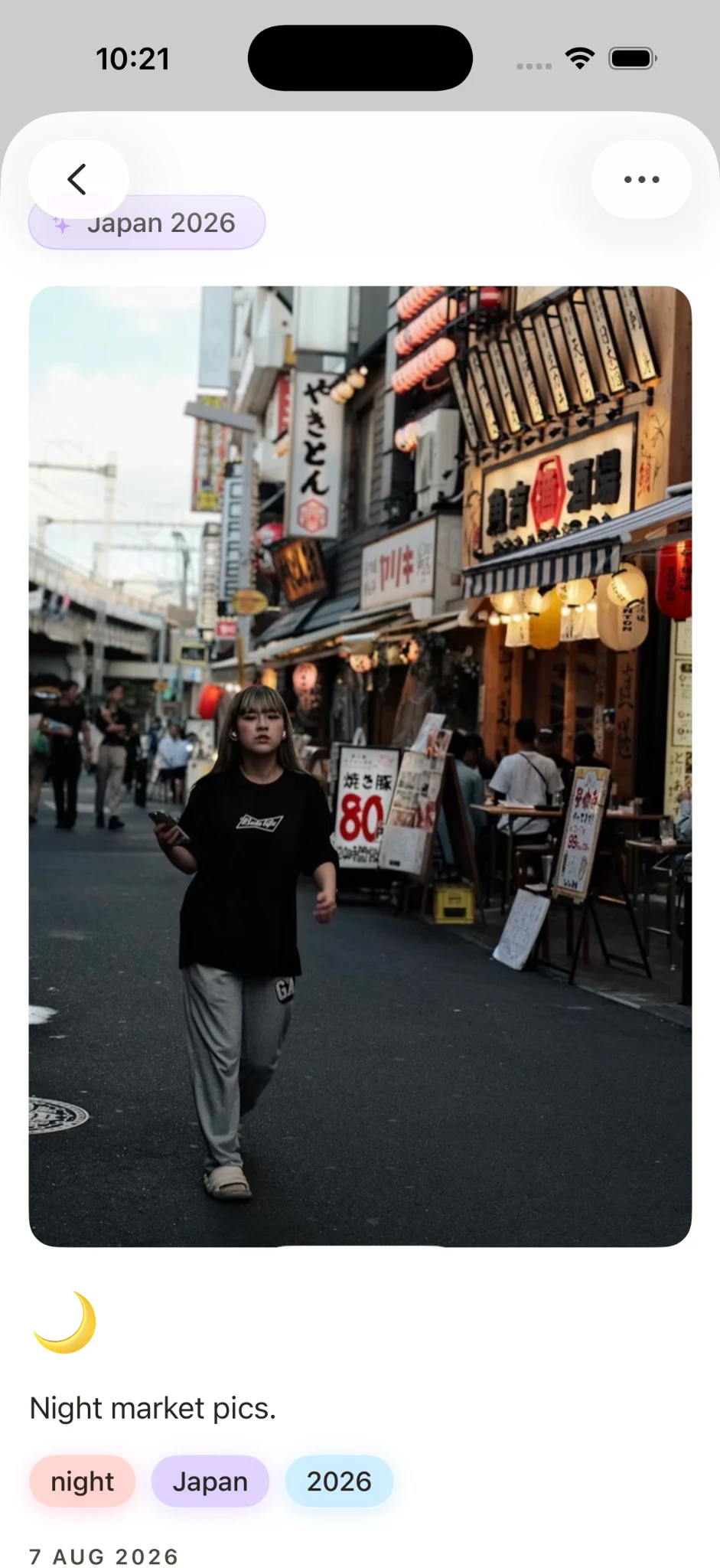
There are more ways to keep a journal than ever. You can write in a notebook, use a notes app, keep a digital diary, build a photo journal, write every day or simply save the moments you know you will want to remember later.
The difficult part is no longer finding somewhere to write. It is finding a journaling system you will actually want to keep.
What is a journal app?
A journal app is software designed to help you record and revisit your life. At its simplest, that might mean writing a diary entry each day. But digital journaling can go much further.
A journal entry can contain a photograph from a holiday, a few sentences about an ordinary Sunday, a major life event, something funny somebody said, a personal reflection, a place you visited or a memory you do not want to lose.
That distinction matters. Traditional diaries are usually organized around dates. Modern journaling software can also organize information around photographs, memories, themes and periods of your life.
A notes app is generally designed to remember information. A journal is designed to remember your life.
Journal app, diary app or journaling program?
People use several different names for essentially the same category of software. You may search for a journal app, journaling app, diary app, digital journal, journaling program, journal software or software for journaling.
A diary traditionally emphasizes chronological entries: what happened today, how you felt and what you did. A journal can be broader. It might contain reflections, photographs, memories, gratitude, travel experiences or longer pieces of writing.
In practice, the best choice is less about terminology and more about what you want to preserve. If you mainly want to write every evening, a simple daily diary may be enough. If you want photographs and writing to become a record of your life, look for a journal designed around memories rather than only dates.
Why use a journal app instead of a paper diary?
Paper has qualities software cannot reproduce. There is something deliberate about opening a physical notebook and writing by hand.
But digital journaling solves several problems that become increasingly important as a journal grows. You can search it, attach photographs, carry years of memories in your pocket, organize entries without physically rearranging pages, preserve copies of your writing and revisit a photograph alongside the story that gives it meaning.
For many people, the best digital journal is not really a replacement for handwriting. It is a different kind of archive.
What should you look for in a journaling app?
1. Will you actually use it?
A journaling program can have dozens of features and still fail if opening it feels like work. Some people love streaks, reminders and daily prompts. Others find them exhausting. A journal can still be meaningful if you write once a week, once a month or only when something worth remembering happens.
2. Can you add photos?
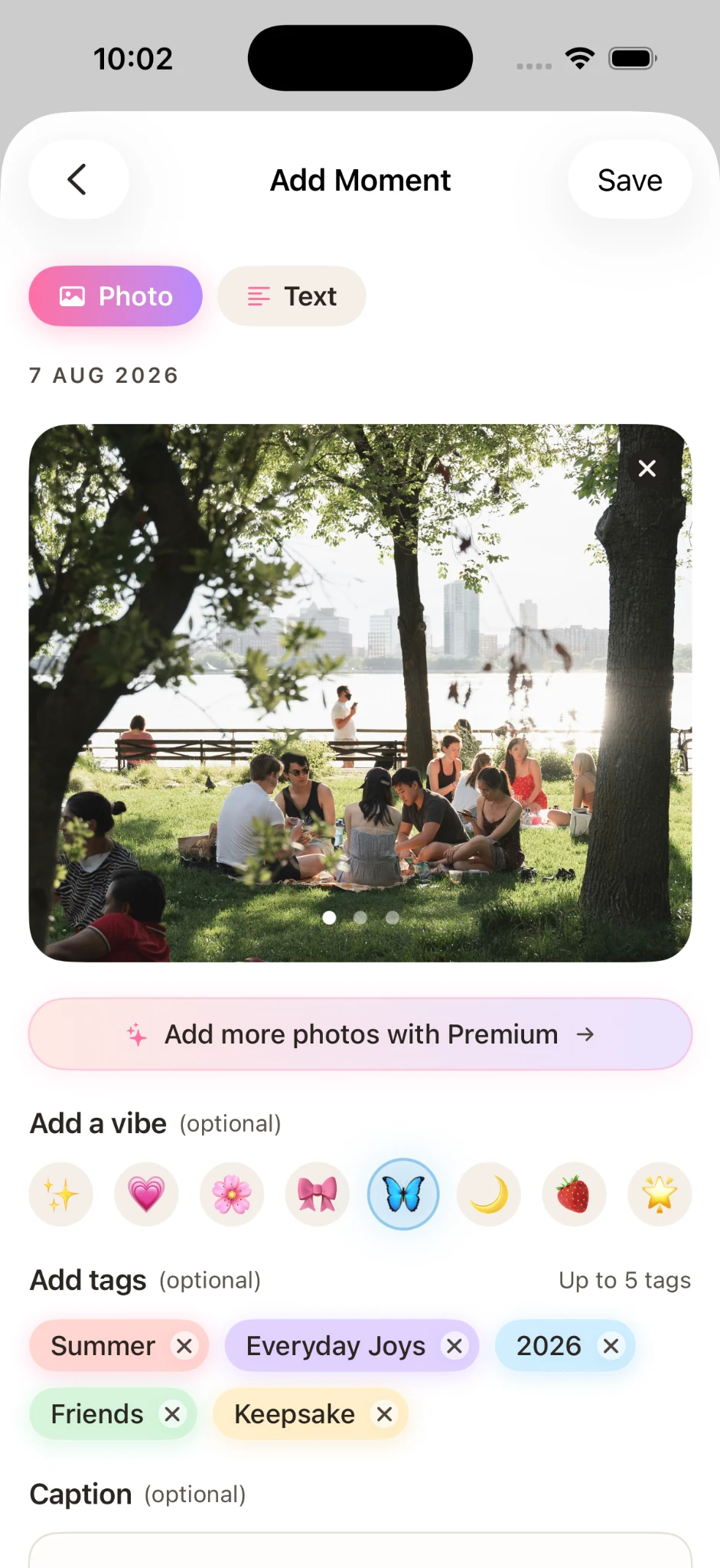
A picture can instantly return you to a place, person or period of your life. But a camera roll remembers the image while forgetting the story. A journal with photos lets the image and its context survive together.
3. How is your journal organized?
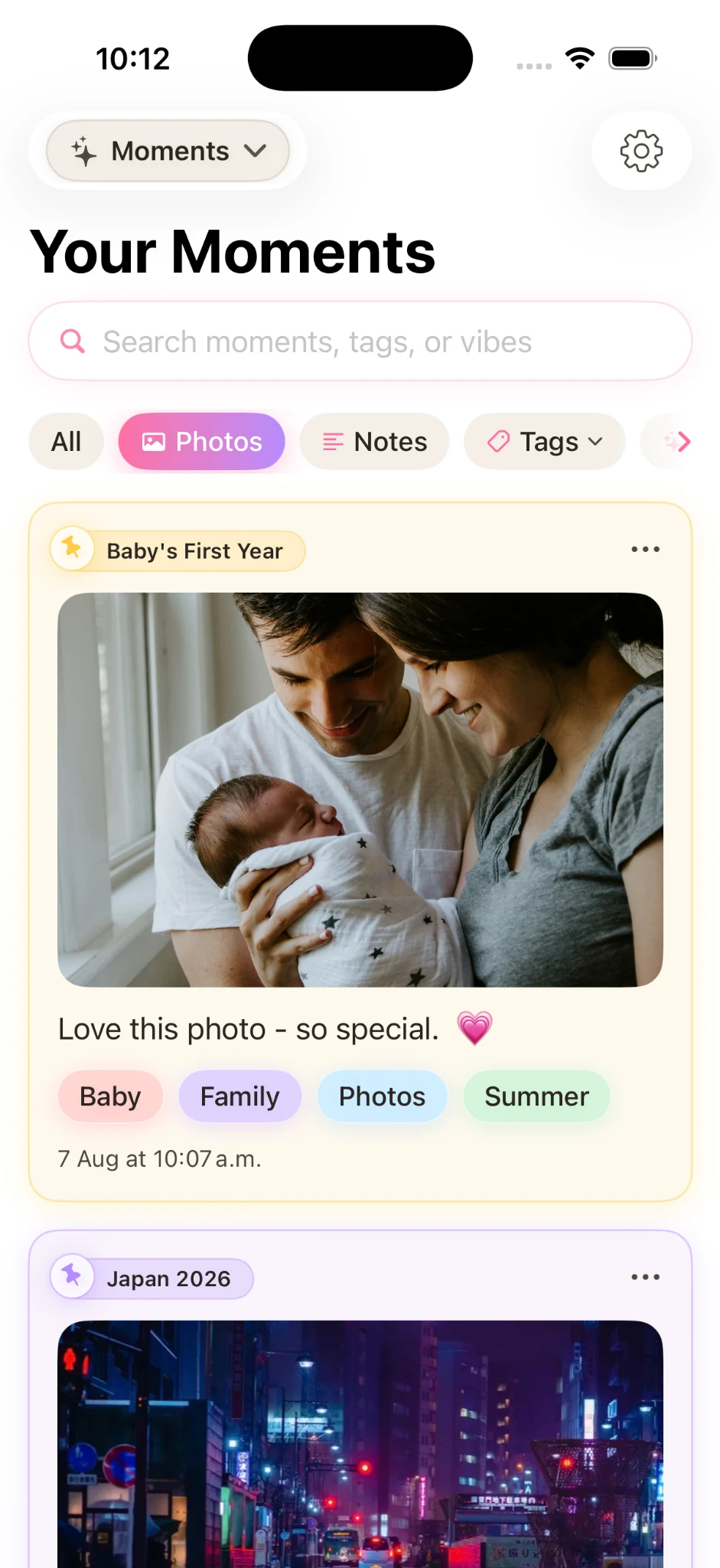
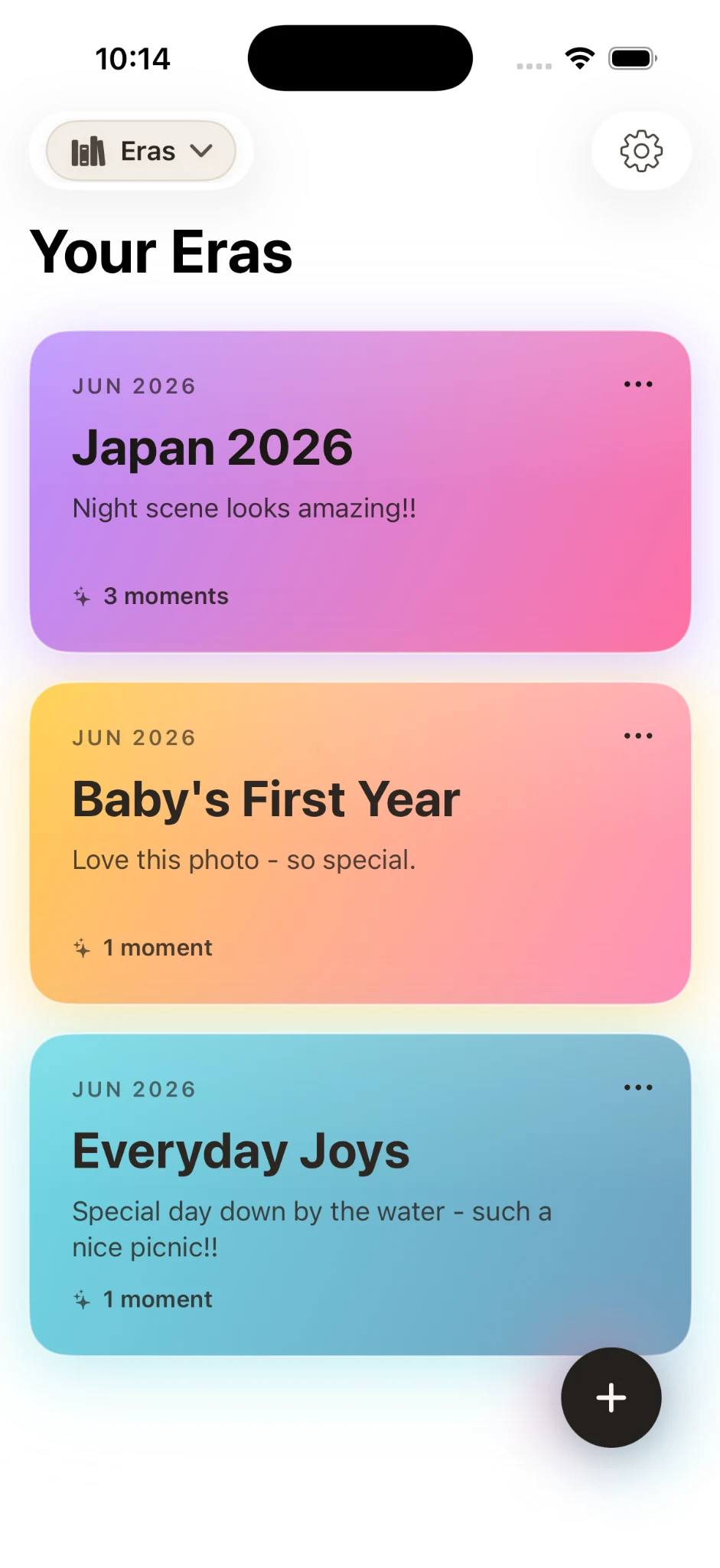
Human memory does not work exclusively through dates. We remember “our first apartment,” “university,” or “that summer in Italy.” Stillkeep uses Eras for larger chapters of life and Moments for the photographs and writing inside them.
4. Is the journal private?
Ask practical questions. Does the app contain advertising? Does it use third-party analytics? Does it track activity across other apps? Where is the journal data stored? Can you export what you have written?
5. Can you find old entries?
A journal becomes more valuable as it accumulates history. Search, tags and larger life chapters should make old memories easier to rediscover rather than merely easier to store.
6. Can you get your journal back out?
Your memories should not become useful only while a particular app exists. Stillkeep can export individual memories as Photocards and complete Eras as PDFs. See the journal data portability guide.
7. Does it fit the way you naturally remember?
Some people remember through words. Others remember through photographs, places or periods of life. Choose software that fits the way you remember.
What is a daily journal app?
A daily journal app is designed around regular entries, usually one entry for each day. For people who enjoy routines, this can work extremely well.
But “daily” should describe an option, not necessarily an obligation. Missing Tuesday does not make Wednesday less worth remembering. For some people, low-pressure journaling is much more sustainable: capture meaningful moments when they happen and let quiet days remain quiet.
What is a digital diary?
A digital diary is the modern equivalent of a traditional personal diary. Instead of writing into a physical book, you use software on your phone, tablet or computer.
The advantages are portability, search, photographs, backups and organization. But there is another advantage that becomes apparent after years of use: digital information can be reorganized. An old memory can be found through search, a photograph can be connected with writing, and a collection of entries can become a chapter rather than simply a sequence of dates.
What is a private journal app?
Privacy can mean several different things. One app may describe itself as private because it offers Face ID. Another may mean entries are encrypted. Another may avoid advertising. Another may keep journal data within infrastructure controlled by the user's platform account.
Stillkeep is designed as a private journal for iPhone. It uses Sign in with Apple and Apple's iCloud/CloudKit infrastructure for journal data. The app does not include third-party advertising, cross-app tracking or third-party analytics.
That does not mean Stillkeep has “no account.” It uses Sign in with Apple. Privacy descriptions should be specific enough for people to understand what they are actually choosing.
For a deeper explanation, see private iCloud journal sync and iOS sandbox diary security.
What about iCloud journal apps?
For iPhone users, iCloud can provide a useful middle ground between purely local storage and an app company maintaining its own journal-content infrastructure.
Different apps implement cloud storage differently, so do not assume every app mentioning iCloud has the same architecture. Stillkeep uses Apple's CloudKit technology for its journal data. Understanding where memories live is worth a few minutes before committing years of personal history to an app.
Should a journal app have ads?
There is nothing inherently unusual about ad-supported software. But a private diary is an unusual place for advertising.
Journaling can include relationships, families, worries, ambitions and moments you may never share publicly. For that reason, many people specifically look for a journal app with no ads or a diary app without ads.
Stillkeep does not display third-party advertisements.
What about tracking and analytics?
Tracking is another area where precise language matters. Many apps use analytics to understand crashes or feature usage. Other forms of tracking can be used for advertising or activity across apps and websites.
Stillkeep does not include third-party analytics, advertising or cross-app tracking in the app. For people keeping highly personal writing, reducing unnecessary third-party involvement can be a meaningful product choice.
Can a journal app be free?
Yes. But free journal app can describe several different business models: fully free, ad-supported, a free trial, or freemium.
Stillkeep has a free tier with optional Premium features. The free starter version includes up to 3 Eras and 20 Moments per Era.
When evaluating a free journaling app, look beyond the word “free” and ask what you can actually do without paying.
What is a photo journal?
A photo journal combines photographs with writing. The photograph records what something looked like. The writing records what it meant.
That combination is powerful because photographs alone are surprisingly incomplete memories. Years later, you may recognize the people and the room but not remember why everyone was together or what made the moment important.
Stillkeep is built around this idea: photographs become Moments that can include the story around them and belong to larger Eras of your life.
Photo journal versus camera roll
Your camera roll is excellent at collection. It is not necessarily good at storytelling.
Most of us accumulate thousands of images: screenshots beside birthdays, receipts beside holidays, and ten nearly identical photographs beside the one image that actually matters.
A photo journal asks a different question: Which moments are worth keeping?
If that problem sounds familiar, see how to curate a camera roll into a photo journal.
What is a memory journal?
A memory journal shifts the focus from “What did I do today?” to “What do I want to remember?” Sometimes those questions produce the same answer. Sometimes they do not.
You might create a memory entry about something that happened yesterday, or find a photograph from years ago and suddenly remember the story behind it. A memory journal should allow both.
How do you organize years of journal entries?
Chronology is the obvious answer, but it is not the only one. A useful approach is to organize memories into life chapters.
Stillkeep calls these chapters Eras. An Era might be University, Our First Home, Summer 2026, Becoming a Parent or Travelling Japan. Inside each Era are individual Moments.
That creates two levels of memory: the moment itself, and the larger story it belongs to.
Do you need journal prompts?
Sometimes. Journal prompts are useful when you want to write but do not know where to begin.
- What happened today that I want to remember?
- Which photograph best represents this week?
- What made me laugh recently?
- What changed this month?
- What ordinary thing in my life might I miss someday?
- What would I want to remember about this period five years from now?
A photograph itself can be a prompt. Open an old picture and ask: What isn't visible in this photograph?
For more ideas, see 100 photo journal ideas.
How much should you write in a digital journal?
As much as the memory needs.
Sometimes that is 1,000 words. Sometimes it is one sentence. Journaling does not need to mean producing essays every night. A useful journal preserves context, and the amount of writing required to do that varies enormously.
What if you can't stick to journaling?
Then stop treating consistency as the goal. The goal is preservation.
Save one meaningful Moment each week. Write alongside one photograph after a trip. Create an Era when a new chapter of life begins. Add something when you catch yourself thinking, “I don't want to forget this.”
Over a decade, even occasional entries can become an extraordinary record. The journal does not need to be complete to be valuable.
Is a notes app enough for journaling?
It can be. If all you need is text and you already enjoy writing in a notes app, there may be no reason to change.
Dedicated journaling software becomes useful when you want the structure around the writing: photographs, dates, search, memory organization, life chapters, reflection and exports.
What's the best journal app for iPhone?
There is no single answer for everybody.
The best journal app is the one whose underlying philosophy matches what you want from journaling. Daily writers may prioritize fast text entry and reminders. Mood-focused users may prioritize tracking. People interested in memories may prefer photographs, search and life-based organization.
If privacy matters deeply, examine the actual storage and tracking architecture rather than relying on a privacy label. If long-term preservation matters, investigate export before you have accumulated ten years of entries.
The right question is not “Which journaling app has the most features?” It is: What do I want this journal to become?
A different approach: journal your life in chapters
Stillkeep was created around a simple idea: your life does not feel like an endless list of dates. It feels like chapters and moments.
An Era is a chapter. A Moment is something inside that chapter worth keeping: a photograph, some writing, a memory, or something ordinary that may become extraordinary with time.
Instead of asking you to fill a blank page every day, Stillkeep lets you gradually build a curated record of your life.
Why photographs and writing belong together
We take more photographs than any previous generation, yet taking more photographs does not necessarily mean preserving more memories.
The missing ingredient is often context. A photograph captures light. A journal captures meaning. Put the two together and you preserve far more than either can preserve alone.
Your journal should still belong to you years from now
Digital journaling has a long time horizon. If you are 25 today, the memories you save may still matter when you are 65.
A beautiful interface matters. But so do privacy, organization and export. Ask whether you are creating content for an app or creating an archive for your future self.
A good journaling program should respect the second one.
How to start a journal on iPhone
Do not begin by promising yourself that you will write every day for the rest of your life. Begin with something real.
- Choose five photographs you care about.
- For each one, write what the photograph cannot tell you.
- Note who was there, what happened before and after, and why it matters.
- Group those memories into the chapter of your life where they belong.
You have started a journal. No streak required.
One simple test
Before choosing any journal app, ask: What do I want this journal to become five or ten years from now? That answer usually matters more than the longest feature list.
Frequently asked questions
What is the best app for journaling?
The best journaling app depends on what you want to preserve. Daily writers may prioritize fast text entry and reminders, while people interested in memories may prefer photographs, search and life-based organization. Privacy and export are also worth considering.
Is there a free journal app for iPhone?
Yes. A number of iPhone journal apps offer free experiences, although “free” can mean fully free, ad-supported, a free trial or a freemium tier. Stillkeep offers a free tier with optional Premium features and does not include third-party advertising.
What is the difference between a diary app and a journal app?
A diary is traditionally chronological and focused on daily experiences. Journaling can include daily writing but may also contain photographs, reflections, gratitude, memories and longer-term life stories. In modern software the terms frequently overlap.
Can I keep a journal with photos?
Yes. Photo journaling combines photographs with written context so you preserve both the image and the story behind it. Stillkeep is designed around combining photographs and writing into Moments.
Is Stillkeep a daily journal app?
Stillkeep can be used daily, but it does not require daily journaling. It is designed to work whether you capture memories every day or only when something feels worth keeping.
Is Stillkeep a private journal app?
Stillkeep is designed as a private iPhone journal. It uses Sign in with Apple and Apple's iCloud/CloudKit infrastructure for journal data, and the app does not include third-party advertising, third-party analytics or cross-app tracking.
Does Stillkeep require an account?
Stillkeep uses Sign in with Apple. It should therefore not be described as a “no account” or “no login” journal app.
Does Stillkeep have ads?
No third-party ads are displayed in the Stillkeep app.
Can I export my journal?
Stillkeep can create Photocards from individual Moments and PDF exports of complete Eras, giving you ways to preserve memories outside the normal journal interface.
Do I have to journal every day?
No. Daily journaling works well for some people, but a journal does not become worthless because there are gaps. Occasional memories can become enormously valuable over time.
What is a memory journal?
A memory journal focuses on experiences you want to preserve rather than requiring a chronological account of every day. Entries may combine photographs, stories and reflections from both recent and older events.
What is journaling software?
Journaling software, a journaling program and a journal app are different terms for software designed to record personal writing, experiences and memories. On iPhone, this normally takes the form of a dedicated journaling or diary app.
The best journal is the one you will still care about later.
Keep the photograph. Write down the part the photograph cannot show. Put it somewhere meaningful. Return to it someday.